


Is Dairy Crossbreeding Right for You?
Nancy Glazier, Small Farms & Livestock Specialist
Northwest New York Dairy, Livestock & Field Crops
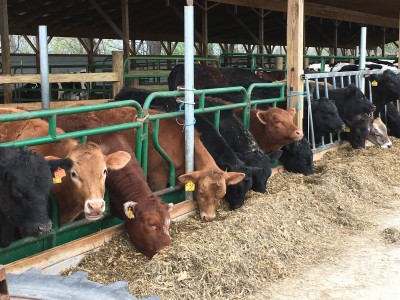
Each farm will need to come up with its individual plan. One of the first questions that will need to be answered, are you hanging on to cows that should be shipped? If so, count them out as culling will shift the number at the bottom. The goal is to breed the top cows to dairy, most likely sexed semen for improving the genetics, and bottom end cows to beef semen from bulls best suited for crossbreeding. These percentages will need to be worked out on each farm. The middle cows will be bred as usual. You will need to determine how many replacement heifers your farm needs, generally 80-85% of the herd. The rest of the calves can leave the farm as beef.
How do you figure out which cows have low genetic potential? One way is through genomic testing, which can run in the $45 range. Another is through pedigree review. Your semen company can help you; either option accurate recordkeeping is critical. You want to make sure semen gets used on the proper cows.
When choosing a beef bull, it should complement the traits of the dairy cow. Dairy breeds are known for their marbling, but are lighter muscled with less desirable muscle conformation as compared to beef breeds. Select beef bulls with calving ease, moderate frames, heavy muscling, and above average rate of gain. Crossbreeding works with all dairy breeds, not just Holstein.
There seems to be a difference of opinion on the conception rate using beef semen. Fertility may be diminished with the tail enders, while some feel beef semen improves the rate. Quality beef semen may cost more, but will be recouped.
Each and every calf born on the farm needs to be treated like a replacement: quality colostrum in a timely manner. As with replacement dairy heifer, immunity is critical when calves are to be raised as quality beef. Droopy calves will not bring a good price! These crossbreds also tend to be thriftier calves and may consume a lot of milk. Be aware they may want to hit the ground and get right up and want to nurse!
Calves will need to be identified as crossbreds to gain a better price than straight Holsteins. ABS has specific ear tags for their crosses, different color tags for calves from Holstein or Jersey cows. An observation has been the calves that look "beefy" will bring a better price, too. Though not part of the reports, demand has been high and steady with little price fluctuation, according observations of two of Cornell/USDA Market News reporters. Reports can be found here.
This concept has been around for several years, but is now gaining momentum. Some of the pieces are still coming into place. There are discussions underway with auction markets to hold special sales for these crossbred calves. There is also potential for pooling these calves or even holding graded (by USDA certified graders) sales. There are opportunities for farms to raise them, either as another income stream or a new enterprise. Some farms are utilizing old heifer facilities or old freestalls after exiting the dairy business. Options include raising them to weaning, up to 500 lbs. and to finished weight.
For additional information:
- Select Sires "Breeding to Feeding", http://www.selectsires.com/programs/breedingtofeeding.html?version=20170404
- Genex "Breeding to Feeding", http://genex.crinet.com/page4653/BreedingToFeeding
- ABS "In Focus", http://www.absglobal.com/ca/dairy/infocus/
For more information about Beef Quality Assurance program contact Katherine Brosnan (kbrosnan@nybeef.org) or Mike Baker (mjb28@cornell.edu), or check out the website.
Dairy Crossbreeding (pdf; 396KB)
Dairy
Livestock
Grazing
Forages
Grains
Upcoming Events
2026 Corn Silage Dry Down Day- Yates County
September 14, 2026
Himrod, NY
Bring a sample of corn stalks from each field you anticipate harvesting for corn silage to receive whole plant dry matter value, estimated harvest date range, and information on best management practices for the 2026 corn silage harvest.
2026 Corn Silage Dry Down Day- Seneca County
September 15, 2026
Romulus, NY
Bring a sample of corn stalks from each field you anticipate harvesting for corn silage to receive whole plant dry matter value, estimated harvest date range, and information on best management practices for the 2026 corn silage harvest.
2026 Dairy Feeder School- Wyoming County
November 11, 2026
Perry, NY
Registration will open by the end of September.
Wednesday, November 11, 2026
Join the Regional Dairy Specialists for a one day on-farm training for dairy farm feeders. The training will be offered in English and Spanish and will feature stations with hands-on activities and demonstrations.