


What Can High Beef Prices Do for Your Dairy?
Libby Eiholzer, Bilingual Dairy
Northwest New York Dairy, Livestock & Field Crops
July 25, 2014
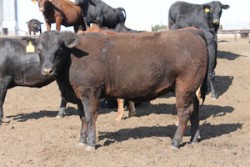
If you're trying to maximize internal herd growth for expansion, then you most likely aren't going to want to sell any more animals, for beef or otherwise. But if you can't add any more cows, and especially if you are already weeding out lower grade heifers to sell as dairy animals, then there is another option to consider.
Some dairies are regularly breeding a percentage of their herd to beef bulls. Bull studs like Genex and ABS have programs set up to help farmers breed and market these animals. Genex's Breeding to Feeding Program uses Limousin semen on dairy cows (preferably Jersey) and the Minnesota-based Wulf Cattle Company contracts to buy back calves and raise them. ABS's InFocus program markets beef semen and tracks offspring to select the best bulls for mating with dairy cows. They cite benefits such as increased fertility, improved calving ease and decreased still births for cows bred to their bulls.
Dairy cattle sold for beef are often lacking in the physical characteristics that make good beef cows. But if dairy calves are bred and raised for that purpose, they can result in much higher quality beef animals. Although no studies have been done on the economic benefits, it would seem that breeding lower quality cattle to beef and selling the offspring could significantly increase income over what would be received for straight dairy animals.
If you have the facilities, crossbred calves can be raised with heifer calves, at least through weaning. But the key to good beef is feeding a high concentrate diet in order to increase muscle mass.
According to Mike Baker, Beef Cattle Extension Specialist at Cornell University, this is very achievable with Holstein steers. Holsteins do marble easily; if measured side by side with a beef steer of the same level of backfat, the Holstein steer would actually have more intramuscular fat, a good thing in the beef industry. Baker does cite some negatives to using Holsteins for beef: their rib eye muscling tends to be oblong instead of the round shape that consumers prefer, they generally have a lower dressing percentage (the difference between live weight and carcass weight) due to lower overall muscle mass, and they also use feed less efficiently than beef animals. If they aren't put on a high energy diet, straight bred Holsteins end up big and lanky: not ideal when marketing for beef. Using a properly selected beef sire will complement the Holstein cow in producing a calf that is more moderate in size, has the muscle size and shape desired in the market and is capable of handling a high forage diet during much of its growing phase.
If you have the facilities, crossbred calves can be raised with heifer calves, at least through weaning. They can then be raised to feeder weight (400-800 lbs.) on pasture or refusals or finished to market weight. An important consideration is whether you have the capacity to raise animals separately for finishing or if you would prefer to sell them as feeder calves.
Another notable question is what kind of market you have in your area for beef. With the increased interest in local foods, forming a partnership with a local beef farmer could be an option to sell feeder calves. Raising calves to 400 pounds or so and then selling them at a local livestock market is another. Of course the ideal situation would be to market a large number of high quality crossbreds, perhaps through a partnership between dairies and a feedlot.
The idea of breeding dairy cows to beef bulls has been around for a long time, but has yet to be put to the test by a significant number of dairy farmers. With the current and forecasted high beef prices, now could be the ideal time for some to give it a little more thought. Baker says that while "beef prices may moderate in the future, there's lots of grass and many empty dairy facilities" across the state, just waiting for an opportunity to become productive again.
Dairy
Livestock
Grazing
Forages
Grains
Upcoming Events
2026 Dairy Feeder School- Wyoming County
November 11, 2026
Perry, NY
Registration will open by the end of September.
Wednesday, November 11, 2026
Join the Regional Dairy Specialists for a one day on-farm training for dairy farm feeders. The training will be offered in English and Spanish and will feature stations with hands-on activities and demonstrations.
2026 Dairy Feeder School- Ontario County
November 13, 2026
Clifton Springs, NY
Registration will open by the end of September.
Friday, November 13, 2026
Join the CCE Regional Dairy Specialists for a one day on-farm training for dairy farm feeders. The training will be offered in English and Spanish and will feature stations with hands-on activities and demonstrations.
Dairy Winter Webinar Series 2027
January 12, 2027
January 19, 2027
January 26, 2027
February 2, 2027
February 9, 2027
February 16, 2027
February 23, 2027
Register for our free upcoming 2027 dairy winter webinar series: LINK TO COME
Announcements
Follow us on Instagram
See photos and reels of our most recent events and programs!Join us on Facebook!
Follow us on Facebook to get up to date posts about events, workshops and everything NWNY!Add us on LinkedIn!
Connect with us on LinkedIn to get more information about upcoming workshops and programs!